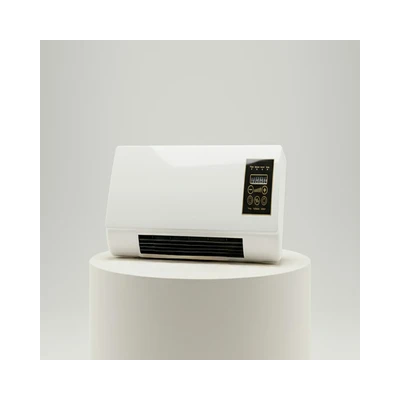
To understand why Heatoor achieves superior heating speed and dramatic electricity savings compared to traditional space heaters, one must examine the fundamental solid-state physics of Positive Temperature Coefficient (PTC) ceramic heating elements.
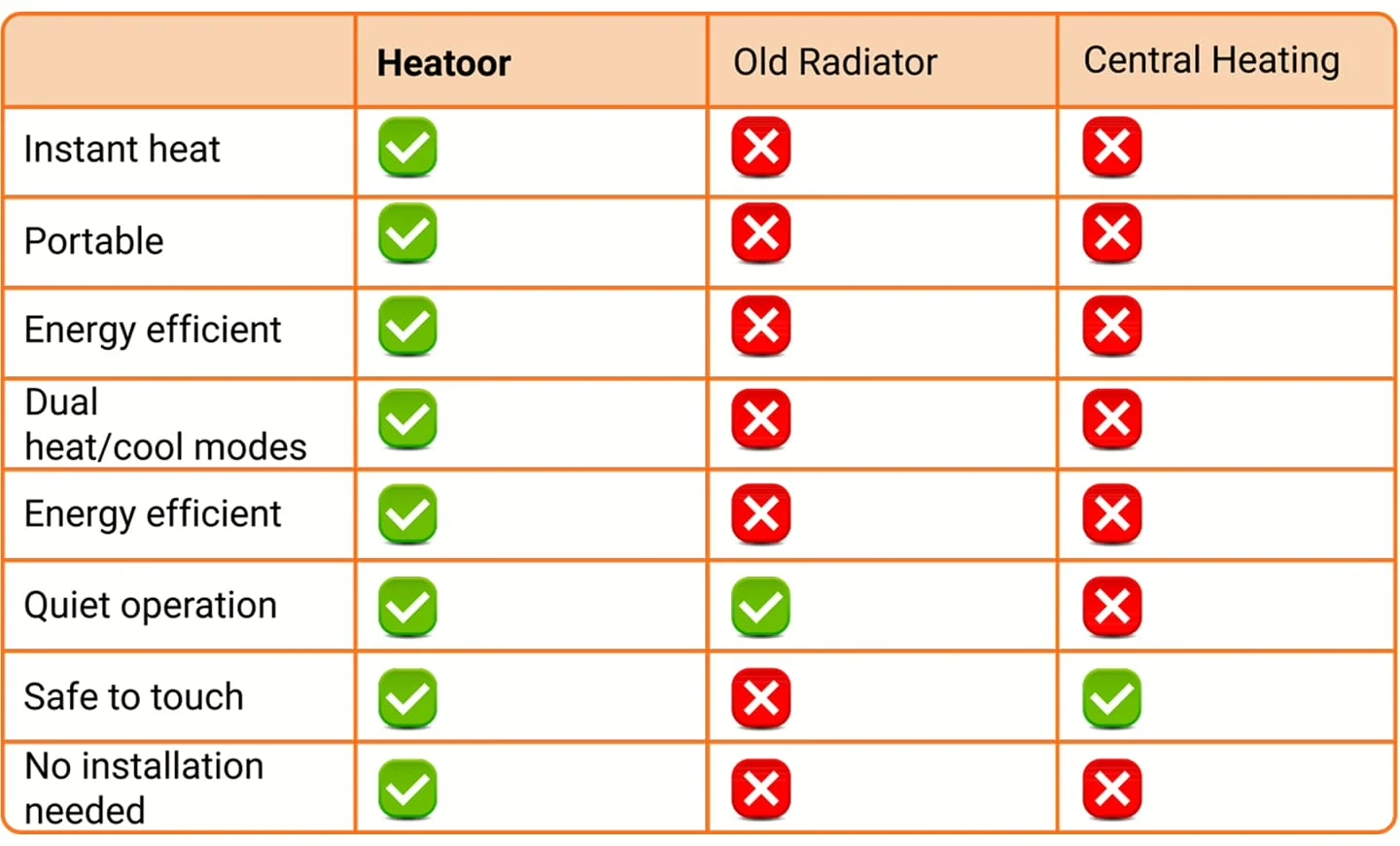
The Limitation of Traditional Resistance Wire
Conventional fan heaters and bar radiators rely on coiled nichrome (nickel-chromium) wire. When voltage is applied, electrical resistance generates extreme heat, causing the wire to glow orange at temperatures often exceeding 400°C to 500°C.
This legacy design suffers from three critical flaws:
- Fixed Resistance: Wire draws constant high wattage (e.g. 2,000W) regardless of whether the surrounding room is chilly or already warm.
- Oxygen Depletion: Glowing wire incinerates airborne lint and biological dust, releasing carbon particulates and drying out indoor relative humidity.
- Fire Hazard: Should airflow be restricted, the wire rapidly escalates towards the melting point of surrounding plastics.
The Barium Titanate Ceramic Revolution
In contrast, Heatoor incorporates specially engineered polycrystalline ceramic stones composed of doped barium titanate (BaTiO3). Unlike standard metals whose electrical resistance changes very little with temperature, PTC ceramics exhibit a non-linear resistance-temperature curve.
At room temperature (around 15°C to 18°C), the ceramic possesses very low electrical resistance, allowing high current flow to generate rapid thermal energy in just 3 seconds.
The Self-Limiting Curie Temperature
As the ceramic reaches its engineered Curie point (approximately 180°C to 200°C), a phase transition occurs in the ceramic crystal lattice. The electrical resistance spikes exponentially by several orders of magnitude.
Acoustic Laminar Convection
To disperse heat efficiently without turbulent fan roar, Heatoor couples its ceramic honeycomb fins to a precision multi-blade impeller. Warm air is pushed through smooth aerodynamic air channels, achieving room air turnover at under 32 decibels — keeping you comfortably warm and peaceful.